for appointments - Contact: 7207412920

Male Infertility in Lupus: The Silent Topic Nobody Talks About
When we talk about lupus and fertility, the discussion almost always focuses on women. But what about men with lupus? Click and read the full blog for further information
Dr Keerthi Talari Bommakanti
2/8/20262 min read
The truth is—male fertility in lupus is real, relevant, and often ignored.
Many men hesitate to ask questions about fertility, sexual health, or sperm health because it feels uncomfortable or embarrassing. Unfortunately, this silence means that problems go undetected and unmanaged, even though many causes are treatable.
Let’s talk about the facts—clearly and honestly.
Can Lupus Affect Male Fertility?
Yes.
Lupus can affect male fertility in several different ways, but this does not mean every man with lupus will be infertile.
Many men with lupus father healthy children, especially when the disease is well controlled.
Why Is This Topic So Rarely Discussed?
Fertility counselling usually focuses on women
Men often feel uncomfortable discussing sexual or reproductive health
Many doctors may not bring it up unless the patient asks
Interestingly, studies show that most men actually want their doctor to talk about it, but wait for the doctor to initiate the conversation.


How Lupus Can Affect Male Fertility
1. Hormonal Changes
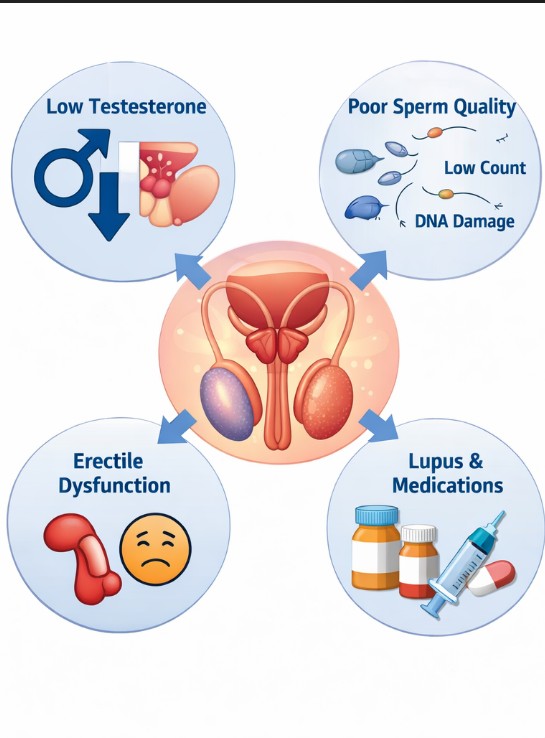
Lupus and chronic inflammation can lower testosterone levels, which may lead to:
Low libido
Erectile dysfunction
Reduced sperm production
The good news?
👉 Better disease control often improves hormone levels.
2. Sperm Quality Issues
Some men with lupus may have:
Low sperm count
Poor sperm movement (motility)
Increased sperm DNA damage
Anti-sperm antibodies (the body mistakenly attacks its own sperm)
Important point:
👉 Even a “normal” semen analysis may miss DNA damage, which is why specialist evaluation is sometimes needed.
3. Erectile & Sexual Dysfunction
Fatigue, pain, stress, depression, vascular inflammation, and medications can all affect:
Erections
Sexual confidence
Frequency of intercourse
These issues are medical, not psychological weakness—and they are treatable.
4. Effect of Lupus Medications
This is a very common worry.
Reassuring facts:
Most lupus medications are safe for male fertility
Good disease control actually improves fertility outcomes
Certain drugs like cyclophosphamide and sulfasalazine need special discussion
👉 Never stop medications on your own. Always discuss first.
Does Male Lupus Affect Pregnancy Outcomes?
Yes—this is important and often unknown.
Studies show that when the father has active autoimmune disease:
Time to conception may be longer
Need for assisted reproduction may be higher
Risk of miscarriage may be slightly increased
This is why pre-conception planning is important for men too, not just women.
What Should Men with Lupus Do?
If you are:
Planning a pregnancy
Facing difficulty conceiving
Experiencing sexual problems
Worried about medications
👉 Talk to your rheumatologist openly.
What to Discuss With Your Rheumatologist
You can ask about:
Semen analysis and hormone testing
Whether sperm banking is needed
Medication safety before conception
Managing fatigue, pain, and stress
Referral to andrology or fertility specialists if needed
Remember:
This is medical care, not an awkward conversation.
Key Take-Home Message
Male infertility in lupus is real but manageable
Most men can father children with proper planning
Silence delays solutions—conversation enables care
If you are a man living with lupus, your reproductive health matters.


connect
for any queries
keerthitalari298@gmail.com
+91 7207412920
Disclaimer: “Educational information only. Not medical advice.”
© RheumatologyForYou.in 2025. All rights reserved.